

The e-commerce landscape is shifting. As consumers look for more sustainable and affordable ways to shop, the secondhand market is booming. Sitting right in the middle of this trend is Mercari, a popular online marketplace. For investors, the company’s over-the-counter ticker—Mcary stock—has become a frequent topic of discussion.
If you are considering adding international e-commerce exposure to your portfolio, you might be wondering whether MCARY is a buy. This guide covers everything you need to know about MCARY stock, from the company’s business model and financial performance to price predictions and market sentiment.
What Is MCARY Stock?
MCARY is the over-the-counter (OTC) ticker symbol for American Depository Receipts (ADRs) of Mercari, Inc. When you buy Mcary stock, you are investing in the Japanese e-commerce giant without having to buy shares directly on the Tokyo Stock Exchange.
Overview of Mercari, Inc.
Founded in 2013 in Japan, Mercari is a consumer-to-consumer (C2C) marketplace app. It allows users to easily buy and sell new and used items on their smartphones. The platform quickly dominated the Japanese market and expanded into the United States in 2014. Today, Mercari is known for its user-friendly interface, secure payment systems, and hassle-free shipping options.
Why MCARY Stock Is Gaining Investor Attention
Investors are taking a closer look at Mcary stock for several key reasons:
- The Circular Economy Shift: More consumers are buying secondhand goods to save money and reduce environmental impact.
- U.S. Market Penetration: Mercari’s continued push into the United States provides a significant runway for growth outside Japan.
- Zero Selling Fees in the U.S.: Mercari recently removed selling fees for U.S. users, aiming to attract a massive wave of new sellers to the platform.
MCARY Stock Price Prediction
Predicting exact stock prices is never guaranteed, but looking at market trends can help set realistic expectations.
Is MCARY Stock a Good Investment in 2026?
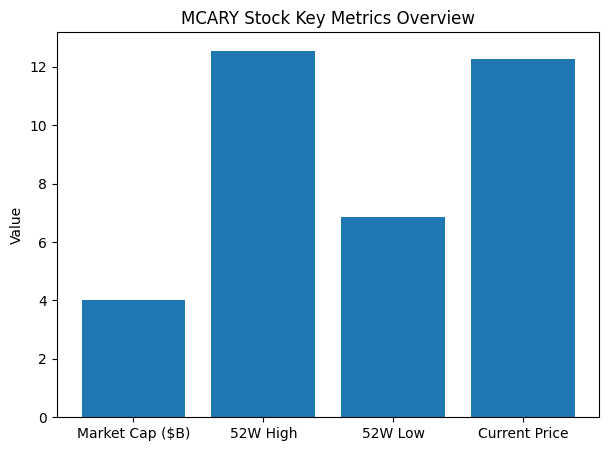
By 2026, the global secondhand apparel and goods market is expected to nearly double. If Mercari successfully captures a large portion of the U.S. market and maintains its dominance in Japan, Mercari’s stock could see significant upside. However, success depends on how well the company manages its new fee structure and defends against competitors.
MCARY Stock Forecast for Long-Term Investors
For long-term investors holding until 2030, MCARY presents a growth play. The transition from physical retail to digital thrift shopping is a long-term consumer shift. [Internal Link Suggestion: Read our guide on long-term growth investing strategies]
Mercari Business Model Explained
Mercari operates a highly scalable platform that connects buyers and sellers. It does not hold inventory, which keeps overhead costs relatively low.
How Mercari Makes Money
Mercari generates revenue through a few primary channels:
- Transaction Fees: In Japan, Mercari charges a flat 10% fee on every sale.
- Payment Processing Fees: The platform earns money on withdrawal and payment processing fees.
- Fintech Services: Mercari operates “Merpay,” a mobile payment service in Japan, which generates revenue through merchant fees and credit services.
- Service Fees (U.S. Market): In the U.S., Mercari recently shifted to a model where buyers pay a service fee instead of sellers paying a commission.
MCARY Stock Financial Performance Analysis
Evaluating MCARY’s financial health is crucial before investing.
Revenue Growth and Earnings Report of MCARY
Historically, Mercari has shown strong top-line revenue growth. The Japanese segment remains highly profitable and acts as a cash cow for the business. However, the U.S. segment has sometimes struggled with profitability due to high marketing costs and intense competition. When reviewing the latest earnings report, investors should pay close attention to the Gross Merchandise Value (GMV)—the total value of goods sold on the platform.
MCARY Stock vs Other E-Commerce Stocks
How does Mercari stack up against its peers?
| Feature/Company | Mercari (MCARY) | eBay (EBAY) | Poshmark (Acquired) |
|---|---|---|---|
| Primary Market | Japan & USA | Global | USA |
| Business Model | C2C Mobile Marketplace | C2C & B2C Auctions | Social Commerce |
| Seller Fees | 10% (Japan) / 0% (USA) | Variable (avg. 13-15%) | 20% |
| Focus Area | General Goods | General Goods & Collectibles | Fashion & Apparel |
AI and Fintech Expansion of Mercari
Mercari is not just an online thrift store. The company is actively investing in new technologies to improve the user experience.
How Mercari Uses Artificial Intelligence
Artificial intelligence plays a massive role in Mercari’s app:
- Image Recognition: When a seller uploads a photo, AI suggests a title, category, and pricing based on similar items.
- Fraud Detection: Machine learning algorithms flag suspicious listings and protect buyers from scams.
- Personalized Feeds: AI curates the homepage to show buyers items they are most likely to purchase based on past browsing history.
Risks and Challenges Facing MCARY Stock
No investment is without risk. Here are the main challenges for Mercari:
- Intense Competition: eBay, Poshmark, Depop, and Facebook Marketplace are fighting for the same users.
- U.S. Profitability: The U.S. market requires heavy advertising spend.
- Currency Fluctuations: Because Mcary stock represents a Japanese company, a weak Japanese Yen can negatively impact the value of the ADR for U.S. investors.
Analyst Ratings and Market Sentiment for MCARY

Market sentiment for MCARY is generally mixed to cautiously optimistic. Analysts appreciate the strong cash flow from the Japanese market but often express concern over the cash burn in the U.S. division. Upgrades usually follow strong GMV growth reports, while downgrades tend to happen if user growth stalls.
Dividend History of MCARY Stock
Growth-focused tech companies rarely pay dividends, and Mercari is no exception. Currently, Mcary stock does not pay a dividend. The company reinvests its profits back into the business to fund expansion, marketing, and technological improvements.
MCARY Stock Technical Analysis
Practical tip for traders: When looking at MCARY on a chart, pay attention to moving averages and trading volume. Because it trades over-the-counter in the U.S., volume can sometimes be lower than stocks listed on the Nasdaq or NYSE. Low volume can lead to wider bid-ask spreads, so always use limit orders when buying or selling market stock.
Recent News Affecting MCARY Stock
Recent shifts in Mercari’s fee structure have dominated the news. By eliminating seller fees in the U.S. and passing service fees to the buyer, Mercari took a massive gamble to increase its seller base. Additionally, the continued expansion of Merpay (Mercari’s mobile payment system) in Japan has bolstered the company’s fintech revenues.
Can MCARY Stock Become the Next Big E-Commerce Winner?
If the new U.S. fee structure works, Mercari could see a massive influx of listings. More listings usually attract more buyers, creating a powerful network effect.
Growth Opportunities for Mercari in Global Markets
Beyond the U.S. and Japan, Mercari has opportunities to expand cross-border trading. Allowing users in the U.S. to easily buy unique items directly from sellers in Japan (and vice versa) could unlock entirely new revenue streams.
MCARY Stock Bullish vs Bearish Case
The Bullish Case:
Mercari dominates Japan. The shift to a zero-selling-fee model in the U.S. will trigger exponential inventory growth, pulling sellers away from eBay and Poshmark. The fintech division (Merpay) continues to grow, diversifying revenue.
The Bearish Case:
The U.S. market is simply too crowded. Passing fees to buyers will decrease conversion rates, meaning items will sit unsold. The company will have to spend too much on marketing to stay relevant in America, dragging down overall profitability.
What Investors Should Know Before Buying MCARY
Before hitting the buy button, understand that OTC stocks can be more volatile.
Is MCARY Stock Undervalued Right Now?
Valuation depends on the metric you use. Based on Price-to-Sales (P/S), Mercari often trades at a discount compared to high-flying U.S. tech stocks. If the company can prove that its U.S. operations can turn a consistent profit, the stock could be considered undervalued at current levels.
Future Outlook of MCARY Stock
The future of MCARY hinges on consumer behavior. As inflation pushes shoppers toward secondhand bargains, Mercari is perfectly positioned to capture that demand. The integration of AI for easier listing and the expansion of its fintech arm make it a fundamentally strong tech company.
Frequently Asked Questions About MCARY Stock
1. What exchange does MCARY trade on?
Mcary stock trades on the Over-The-Counter (OTC) markets in the United States—the primary shares of Mercari trade on the Tokyo Stock Exchange.
2. Does Mercari pay a dividend?
No, Mercari does not currently pay a dividend. It is a growth-oriented tech company that reinvests capital into expansion.
3. Why did Mercari remove selling fees in the U.S.?
Mercari removed selling fees to attract more sellers to the platform, making it easier and more appealing to list items. Buyers now pay a service fee instead.
4. Is MCARY stock safe?
All stocks carry risk. MCARY has the backing of a highly profitable Japanese business, but its OTC status and reliance on the competitive U.S. market make it moderately volatile.
Is MCARY a Buy?
Mcary Stock offers a unique way to invest in the booming global secondhand economy and the Japanese fintech space. While the company faces stiff competition in the United States, its dominant position in Japan provides a strong financial foundation.
If you believe in the long-term shift toward sustainable, peer-to-peer commerce and are comfortable with the risks of an OTC stock, MCARY is worth watching. Remember to do your own due diligence, review their upcoming earnings reports regarding U.S. Gross Merchandise Value, and consult with a financial advisor to ensure it fits your portfolio goals.