
The financial world loves complex words and acronyms. You might hear terms on the business news and wonder what they actually mean. One of those terms is an “organised trading facility,” often shortened to OTF. If you feel confused by it, you are not alone.
Financial markets can seem like a totally different language. However, the basic concepts are usually straightforward once you strip away the heavy jargon. This guide breaks down exactly what an OTF is in plain English. You will learn how these trading venues work, what people buy and sell on them, and why regulators created them in the first place.
Understanding the Basics of Financial Markets

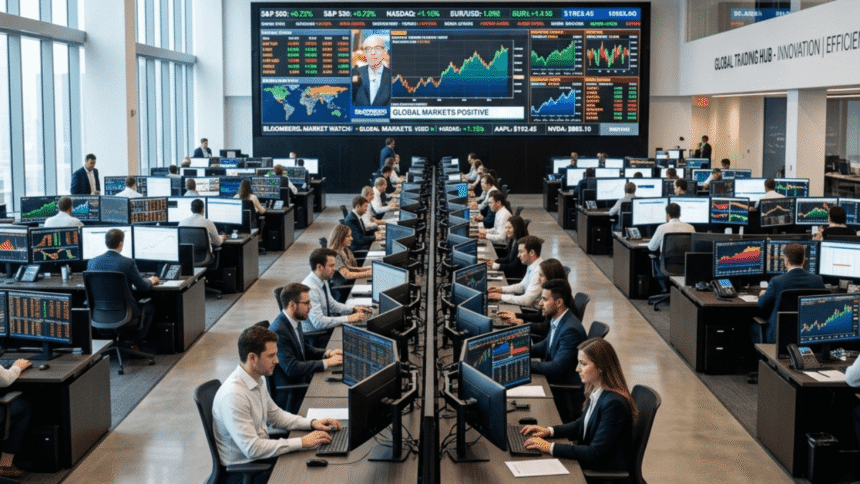
This chart shows the increasing adoption of OTF platforms over time.
Before looking at the specifics of an organised trading facility, it helps to understand how trading happens generally. When people want to buy or sell financial items like stocks, they go to a trading venue.
A trading venue is simply a marketplace. Just like a farmer’s market connects people selling apples with people who want to buy apples, a financial trading venue connects buyers and sellers of financial products.
For a long time, there were two main ways to trade:
- On an exchange: A public, highly regulated market like the New York Stock Exchange.
- Over-the-counter (OTC): A private trade arranged directly between two parties, often over the phone or via private computer networks.
Private OTC trades used to be entirely hidden from the public view. Regulators wanted to make these hidden trades safer and more visible. To do this, they created new types of official marketplaces. One of these new marketplaces is the organised trading facility.
What Exactly is an Organised Trading Facility?
OTF Trading Volume Trend

Volume
│                           ████
│                        ███████
│                     ██████████
│                  █████████████
│               ████████████████
└────────────────────────────────→ Years
   2018   2020   2022   2024   2026
The graph represents growing trading activity on organised trading facilities.
An organised trading facility is a specific type of regulated trading venue. It was introduced by European financial rules known as MiFID II in 2018.
An OTF allows multiple buyers and sellers to interact with each other and make trades. However, an OTF is different from a regular stock exchange because of two main rules:
- No stocks allowed: You cannot buy or sell regular company shares (equities) on an OTF.
- Discretionary matching: The person or company running the OTF gets to use their own judgment to match buyers and sellers together.
What Can You Trade on an OTF?
Because stocks are banned on these platforms, OTFs focus entirely on “non-equity” financial instruments. If you use an OTF, you will mostly find people trading the following items:
- Bonds: A way for companies or governments to borrow money from investors.
- Derivatives: Special contracts whose value depends on something else, like the price of oil or a currency exchange rate.
- Structured finance products: Complex investments made by grouping various financial assets together.
- Emission allowances: Permits that allow companies to emit a certain amount of carbon dioxide or other greenhouse gases.
How Does an OTF Work?
The most unique feature of an OTF is how the trades actually happen. The operator of the facility has “discretion.”
To understand discretion, imagine a real estate agent. When a real estate agent has a house to sell, they do not just shout the price to a crowd and give it to the first person who yells back. Instead, they look at their list of buyers, consider who might be the best fit, and carefully arrange a deal that works for everyone.
The operator of an OTF acts somewhat like that real estate agent. They have the power to decide if, when, and how to match a buyer’s order with a seller’s order. They can choose to place an order inside their system, or they can choose to remove an order if it does not make sense for the market.
This human element helps facilitate trades for complex financial products that might be difficult to sell on a rigid, automated computer system.
Why Were OTFs Created?
After the global financial crisis of 2008, government regulators realized that too much financial trading was happening in the shadows. Large banks and investment firms were trading billions of dollars in private OTC deals. Because these trades were private, no one really knew how much risk the banks were taking.
European regulators passed the MiFID II laws to fix this problem. They wanted to force those hidden private trades out into open, regulated spaces.
By creating the OTF category, regulators gave investment firms a flexible, regulated venue to trade complex items like bonds and derivatives. The creation of OTFs brought several major benefits to the financial system:
- Better transparency: OTFs must report their trading data to regulators and the public. This means everyone can see the true prices of bonds and derivatives.
- Safer markets: Because the venues are regulated, there are strict rules to prevent market manipulation and fraud.
- Fairer pricing: When multiple buyers and sellers gather in one regulated place, it creates healthy competition. This usually leads to fairer prices for everyone involved.
Comparing OTFs to Other Trading Venues
| Feature | Traditional Exchange | Organised Trading Facility (OTF) |
|---|---|---|
| Regulation | Strict | Strict |
| Flexibility | Lower | Higher |
| Trading Products | Mainly Stocks | Bonds, Derivatives, Structured Products |
| Order Matching | Automatic | Operator discretion allowed |
| Transparency | High | High |
To fully grasp the role of an OTF, it helps to see how it compares to other common trading venues.
Regulated Markets (RM)
A Regulated Market is a traditional stock exchange. These venues handle regular company shares. They operate with strict, non-discretionary rules. A computer algorithm usually matches buyers and sellers automatically based on price and time.
Multilateral Trading Facilities (MTF)
An MTF is very similar to an exchange. It can handle stocks, bonds, and derivatives. Like an exchange, it uses strict, non-discretionary rules to match buyers and sellers. An MTF operator cannot use their own judgment to arrange a trade.
Organised Trading Facilities (OTF)
An OTF cannot handle stocks, only bonds and derivatives. Unlike the other two venues, the operator uses their own discretion and judgment to match buyers with sellers.
Frequently Asked Questions
Who can operate an organised trading facility?
Only regulated financial companies, like investment firms or market operators, can run an OTF. They must apply for a specific license from their national financial regulator and follow strict operational rules.
Can a regular person trade on an OTF?
Generally, no. Organised trading facility are designed for professional investors, large banks, hedge funds, and institutional traders. The financial products traded on these platforms are usually too complex and expensive for everyday retail investors.
Are OTFs only used in Europe?
The specific legal term “Organised Trading Facility” was created by European law (MiFID II). However, other countries have very similar concepts under different names. For example, in the United States, a “Swap Execution Facility” (SEF) serves a similar purpose for trading derivatives.
Taking Your Financial Knowledge Further
Understanding terms like an organised trading facility helps you make sense of global finance. While these venues are mostly used by massive banks and professional traders, the rules that govern them impact the entire economy. By bringing dark trades into the light, OTFs help keep the financial system stable, transparent, and fair.
If you want to continue building your financial vocabulary, start by following major financial news outlets and looking up any unfamiliar terms as you read. Building your knowledge step by step is the best way to master the language of the markets.