
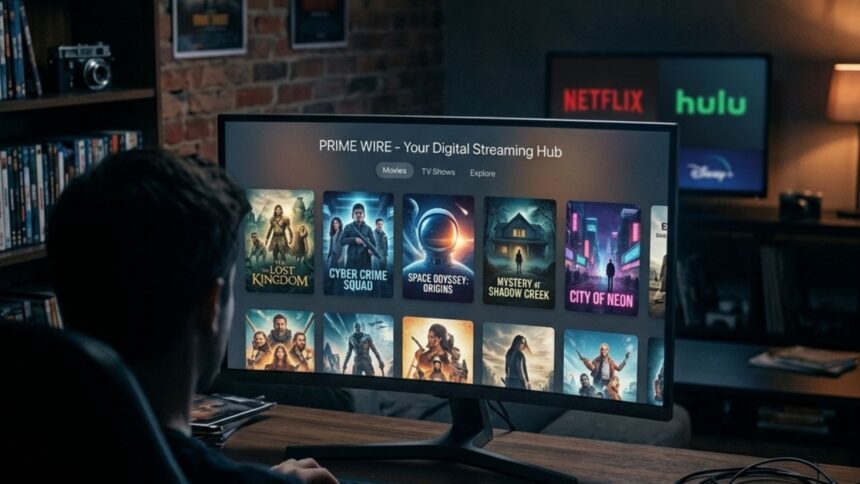
Prime Wire is a free, unofficial media aggregator website that provides links to stream movies and television shows. It does not host content on its own servers but rather indexes links from third-party sources. Because it provides unauthorized access to copyrighted material, using Prime Wire carries significant legal and cybersecurity risks, prompting many users to seek safer, legal alternatives like Tubi or Netflix.
The global shift toward digital streaming has fundamentally changed how audiences consume entertainment. Viewers now have immediate access to thousands of movies and television shows across dozens of platforms. However, this convenience comes at a high financial cost. With the fragmentation of streaming rights, consumers often find themselves paying for four or five different subscription services just to watch their favorite shows.
This subscription fatigue has driven many viewers to search for free, centralized alternatives. Unofficial streaming aggregators emerged to fill this gap, offering massive libraries of content without monthly fees. Among these platforms, Prime Wire built a massive following by providing a simple, search-engine-style approach to finding media online.
Understanding how these platforms operate requires looking beyond their massive content libraries. Users must weigh the appeal of free access against serious concerns regarding digital safety, malware, and copyright law. This comprehensive guide breaks down exactly what Prime Wire is, how its technology works, and the critical legal and safety factors you need to know before interacting with unofficial streaming sites.
What is Prime Wire and how did it start?
Definition of Prime Wire
Prime Wire is a free media indexing website that organizes and links to video content hosted on external servers. Instead of hosting video files directly, Prime Wire acts as a search directory for streaming media. When a user clicks on a movie or television show on the platform, Prime Wire provides a list of third-party video players where the content can be viewed.
Brief history and background
The platform has operated under several different names since its inception. Originally known to many internet users as “LetMeWatchThis,” it later rebranded to “1Channel” before eventually settling on the Prime Wire name. Throughout its history, the site has constantly migrated across different web domains to avoid takedowns from internet service providers (ISPs) and anti-piracy organizations.
Why it became popular
Prime Wire gained traction primarily because it offered a centralized location for almost any piece of media a viewer could want. While paying subscribers had to bounce between Netflix, Hulu, and Amazon to find specific movies, Prime Wire indexed everything in one place. Its popularity surged because it completely bypassed geographic content restrictions and subscription paywalls, appealing heavily to budget-conscious internet users.
How does Prime Wire work?
Content aggregation system
Prime Wire operates using an automated scraping system. The site deploy bots to crawl the internet for video files hosted on cyberlockers and video-sharing platforms. Once it finds a media file, it indexes the link, matches it with metadata (like movie posters, cast lists, and synopses from databases like IMDB), and publishes it on the Prime Wire website.
Streaming and search functionality
When a user searches for a specific title, Prime Wire queries its database of indexed links. The platform presents the user with a landing page for that specific movie or show, followed by a list of clickable host links. The user selects a host, and the video loads in an embedded third-party player directly within the Prime Wire webpage.
User experience overview
The user experience heavily relies on community interaction. Prime Wire allows users to rate the quality of the third-party links. Because many scraped links are dead, low quality, or fake, this community voting system helps viewers identify which video hosts actually work. A link with a high rating is generally functional, while low-rated links are often broken or malicious.
What are the key features of Prime Wire?
Large movie and TV show library
The most prominent feature of Prime Wire is its expansive database. Because the site aggregates links rather than paying for hosting or licensing, it indexes virtually every movie and television show available online, ranging from classic cinema to newly released broadcasts.
Search and filtering options
Prime Wire provides robust filtering tools to help users navigate its massive library. Visitors can sort content by genre, release year, IMDB rating, and current popularity. This makes it highly functional for users who want to browse for new content rather than searching for a specific title.
Watchlists and favorites
Registered users have access to personalization tools. The platform allows viewers to create custom watchlists, track the television episodes they have already viewed, and save their favorite content for easy access later.
Free access to content
Every feature on Prime Wire, from streaming to account creation, is entirely free. The platform sustains its server costs entirely through display advertising and pop-up networks rather than charging users a subscription fee.
How do you navigate the Prime Wire interface?
Homepage overview
The Prime Wire homepage is designed to resemble premium streaming services. It highlights trending movies, newly added television episodes, and highly rated content. The layout is grid-based, displaying high-quality theatrical posters and brief synopses when a user hovers over an image.
Finding movies and TV shows
Navigation relies on a prominent top search bar and categorized drop-down menus. Users can type a query or click through dedicated “Movies” and “TV Shows” tabs. Each title’s individual page includes a plot summary, cast information, trailer links, and the critical list of external streaming sources.
Account registration features
While anyone can search the site, Wire prompts users to create free accounts to unlock community features. Registration requires an email address and password. However, cybersecurity experts strongly advise against using real personal information or reused passwords on unofficial streaming sites due to frequent data breaches.
Is Prime Wire legal to use?
Copyright concerns
Prime Wire operates in direct violation of copyright laws in most developed nations. The platform provides unauthorized access to intellectual property, circumventing the financial compensation owed to creators, studios, and legitimate distributors. While Wire argues it only indexes links and hosts no files, courts routinely classify this behavior as facilitating copyright infringement.
Legal considerations by country
The legality of using Prime Wire depends entirely on local jurisdiction. In the United States, the United Kingdom, and Australia, internet service providers actively block access to known Wire domains under court orders. In some countries, viewing an unauthorized stream is considered a legal gray area, while downloading the file is a strict criminal offense.
Risks users should know
Users accessing Prime Wire face potential consequences from their internet service providers. ISPs can track unencrypted web traffic and may issue copyright infringement notices, throttle internet speeds, or terminate service entirely for users caught repeatedly accessing pirated content.
Is Prime Wire safe to use?
Security concerns
Unofficial streaming sites like Wire are notoriously unsafe. Because legitimate advertising networks (like Google AdSense) refuse to work with piracy sites, Wire relies on unregulated, high-risk advertising networks. These networks frequently distribute malicious software.
Pop-up ads and redirects
Clicking anywhere on the Wire interface often triggers invisible pop-ups or forced redirects to external websites. These redirects frequently lead to phishing scams, fake software updates, or adult content. The embedded video players themselves are often overlaid with invisible ads that trigger when the user attempts to click “play.”
Privacy risks
Prime Wire offers no guarantees regarding user data privacy. Site administrators can track IP addresses, browsing habits, and email addresses provided during registration. This data can be sold to third-party marketers or exploited by hackers if the site’s database is compromised.
What are the pros and cons of Prime Wire?
To summarize the platform’s utility and risks, here is a breakdown of the main advantages and disadvantages of Wire.
| Pros of Prime Wire | Cons of Prime Wire |
|---|---|
| Free access: No monthly subscription fees are required to use the platform. | Legal concerns: Violates copyright laws and distributes pirated material. |
| Huge content library: Aggregates almost every movie and TV show imaginable. | Ads and pop-ups: Heavily saturated with aggressive, disruptive advertising. |
| Easy navigation: Simple interface with excellent search and filtering tools. | Unofficial content sources: Links are often broken, low quality, or fake. |
| No subscription required: Users can watch content without providing credit card details. | Potential security risks: High probability of encountering malware and tracking scripts. |
What are the best legal alternatives to Prime Wire?
For users looking to avoid malware and legal trouble, the market offers plenty of authorized streaming services.
Netflix
As the pioneer of modern streaming, Netflix remains the gold standard for original programming and exclusive television series. While it requires a paid subscription, it provides a completely secure, ad-free experience with seamless cross-device synchronization.
Hulu
Hulu is ideal for users looking to watch television shows immediately after they air on traditional broadcast networks. It offers both ad-supported and premium ad-free tiers, making it a flexible, legal alternative.
Disney+
For fans of massive franchises (Marvel, Star Wars, Pixar), Disney+ offers an unparalleled, legal library of family-friendly and blockbuster content.
Amazon Prime Video
Included with a standard Amazon Prime subscription, this service offers a massive library of original content and the ability to rent or buy newly released theatrical films directly through the platform.
Tubi TV
Tubi is one of the best direct alternatives to Wire because it is completely free and completely legal. Owned by Fox Corporation, Tubi supports its massive library of movies and older television shows through standard, safe television-style commercial breaks.
Crackle
Similar to Tubi, Crackle is a free, ad-supported streaming service. While its library is smaller than paid competitors, it offers a secure way to stream Hollywood movies and television shows without a subscription.
How does Prime Wire compare to other streaming platforms?
Choosing a streaming platform requires balancing cost, safety, and content availability. Here is how Wire compares to both premium and free legal alternatives.
| Feature | Prime Wire (Unofficial) | Netflix (Premium Legal) | Tubi (Free Legal) |
|---|---|---|---|
| Pricing | Free | Monthly subscription | Free |
| Legality | Illegal/Unauthorized | Fully legal | Fully legal |
| Safety | Low (Malware risks) | High (Secure) | High (Secure) |
| Ads | Aggressive pop-ups | None (on standard plans) | Regulated video ads |
| Content Library | Unlimited (Aggregated) | Limited by licensing | Limited by licensing |
What are common issues and troubleshooting steps for Prime Wire?
Because Prime operates on the fringes of the internet, users frequently encounter technical issues.
Site not loading
Prime domains are frequently seized by authorities or blocked by ISPs. If the site fails to load, it generally means the specific domain has been taken down. Users often bypass this by using proxy sites, mirror domains, or Virtual Private Networks (VPNs) to route their traffic through countries with different internet regulations.
Streaming errors
If a video fails to play, it usually means the third-party file host has deleted the video due to a DMCA takedown request. The only troubleshooting step for a broken video is to return to the Prime directory and select a different hosting link provided by the community.
Account-related problems
Because Prime has no official customer support team, users who lose their passwords or experience account glitches have very little recourse. Creating a new, anonymous account is usually the only way to restore watchlist functionality.
Frequently Asked Questions (FAQs)
Is Prime Wire free to use?
Yes, Prime is completely free. The site generates revenue through aggressive display advertising and pop-up networks rather than charging users a subscription fee.
Do I need to register an account to use Prime Wire?
No, an account is not required to search for or stream media on Prime . Accounts are only necessary if you want to use community features like commenting, saving favorites, and building custom watchlists.
Is Prime Wire available worldwide?
While the website exists on the global internet, many countries actively block access to Prime domains. Users in the US, UK, Australia, and parts of Europe often find the site blocked by their internet service providers.
Can I download movies directly from Prime Wire?
Prime Wire itself does not host or provide direct download links. Some of the third-party video hosts that Prime links to offer download buttons, but clicking these buttons carries an extreme risk of downloading malware instead of a video file.
What are the best safe alternatives to Prime Wire?
If you want free content without the legal and security risks, the best alternatives are Tubi TV, Pluto TV, and Crackle. For premium, ad-free viewing, Netflix, Hulu, and Amazon Prime Video remain the top choices.
Final Thoughts on Prime Wire
Prime Wire represents a specific era of internet media consumption where users traded digital security for free access to massive content libraries. While the platform excels at aggregating an unparalleled volume of movies and television shows into one easily navigable interface, the underlying risks cannot be ignored.
The site operates outside of legal boundaries, relying on pirated content and unregulated advertising networks. Consequently, users expose themselves to invasive tracking scripts, malicious software, and potential legal action from internet service providers.