
GMHIW was the ticker symbol for the warrants of Gores Metropoulos, Inc., a Special Purpose Acquisition Company (SPAC). These warrants gave investors the right to purchase common stock at a specific price. After Gores Metropoulos merged with Luminar Technologies in 2020, GMHIW warrants were converted and eventually replaced by the new ticker, LAZR.
During the financial boom of 2020 and 2021, Special Purpose Acquisition Companies (SPACs) became one of the most talked-about vehicles for taking private companies public. Retail and institutional investors alike flocked to these “blank check” companies in hopes of finding the next massive tech startup. Among the sea of tickers that dominated financial news during this era was GMHIW, a symbol that represented a unique piece of a highly anticipated merger.
If you are researching historical market data or trying to understand the mechanics of SPACs, understanding the GMHIW warrant is an excellent case study. GMHIW was not a standard share of stock. Instead, it was a warrant tied to Gores Metropoulos, Inc., a SPAC that ultimately merged with the lidar technology company Luminar Technologies.
This comprehensive guide will break down exactly what GMHIW was, how SPAC warrants function in the broader financial ecosystem, and what happened to the GMHIW stock and warrants during the famous Luminar merger. By looking back at the history of Gores Metropoulos, investors can learn valuable lessons about the risks and rewards of trading SPAC warrants.
What exactly was the GMHIW warrant?
To understand GMHIW, you first need to understand the entity behind it: Gores Metropoulos, Inc. Founded by veteran investors Alec Gores and Dean Metropoulos, Gores Metropoulos, Inc. was a blank check company created specifically to raise capital through an initial public offering (IPO) and then acquire an existing priv
GMHIW Overview
| Item | Details |
|---|---|
| Ticker | GMHIW |
| Company | Gores Metropoulos, Inc. |
| Security Type | Warrant |
| Industry | SPAC |
| Successor Company | Luminar Technologies |
| Current Ticker | LAZR |
ate company.
When a SPAC goes public, it typically offers units to early investors. These units usually consist of one share of common stock and a fraction of a warrant. A warrant is a financial derivative that gives the holder the right, but not the obligation, to purchase common stock at a predetermined price (known as the exercise price or strike price) before a specific expiration date.
GMHIW was the designated ticker symbol for the warrants associated with Gores Metropoulos. While the common shares traded under the ticker symbol GMHI, the warrants traded separately under GMHIW. Investors who held the GMHIW warrant had the speculative opportunity to buy shares of the post-merger company at a fixed price, provided the merger was successful and the stock price climbed high enough to make exercising the warrant profitable.
How do SPAC warrants actually work?
SPAC warrants are complex financial instruments that require a deep understanding of market mechanics. They are generally considered higher risk than traditional common shares. Here is a breakdown of how a standard SPAC warrant like GMHIW functions:
What is the typical exercise price for a SPAC warrant?
The standard exercise price for a SPAC warrant is $11.50 per share. This means that if you hold a warrant, you can pay $11.50 to the company to receive one whole share of common stock, regardless of how high the actual stock price is trading on the open market.
What are the conditions for exercising a warrant?
Warrants cannot be exercised immediately. Typically, a SPAC warrant becomes exercisable either 30 days after the completion of the business combination (the merger) or 12 months after the SPAC’s initial IPO, whichever is later. Furthermore, the company must have an effective registration statement on file with the Securities and Exchange Commission (SEC) covering the common stock issuable upon exercise of the warrants.
What is a forced redemption?
One critical feature of SPAC warrants is the “redemption clause.” If the common stock price trades above a certain threshold (usually $18.00 per share) for 20 out of 30 consecutive trading days, the company has the right to “call” or redeem the warrants. When a company issues a redemption call, warrant holders are forced to either exercise their warrants by paying the $11.50 strike price or sell them on the open market within a brief window (usually 30 days). If investors fail to act, the warrants become essentially worthless, usually redeemed by the company for a nominal fee like $0.01.
What is the history of Gores Metropoulos, Inc.?
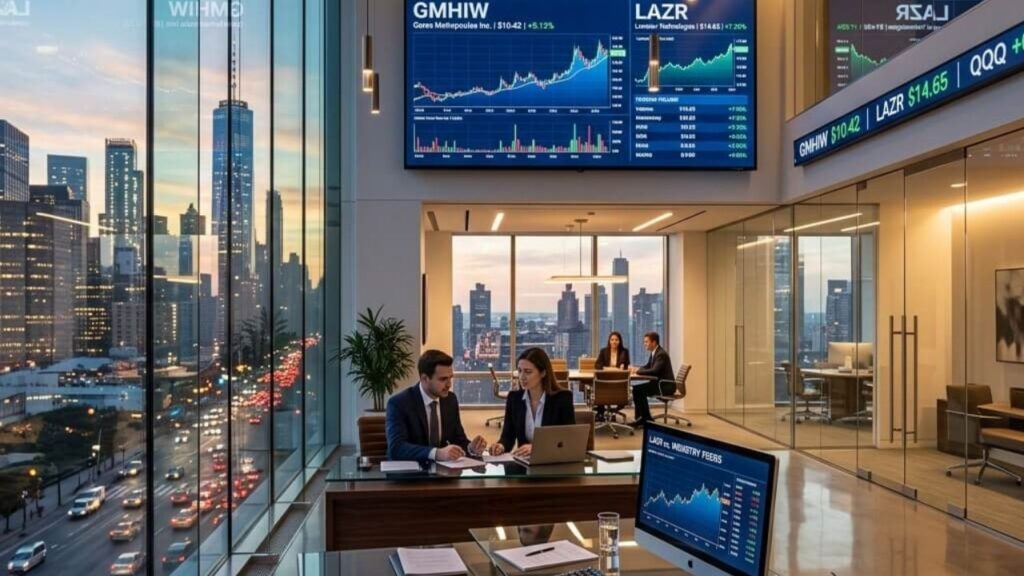
Gores Metropoulos, Inc. (ticker: GMHI) was formed as a partnership between two titan investment firms: The Gores Group, founded by Alec Gores, and Metropoulos & Co., led by Dean Metropoulos. The Gores Group had a strong track record of successful SPAC transactions, making GMHI a highly anticipated offering when it went public in early 2019.
The objective of Gores Metropoulos was to identify a target company with strong growth potential, taking it public via a reverse merger. In August 2020, Gores Metropoulos announced that it had found its target: Luminar Technologies.
Luminar was a highly publicized startup specializing in lidar (Light Detection and Ranging) technology, an essential hardware component for autonomous vehicles. At the time of the announcement, the autonomous vehicle sector was experiencing a massive influx of investor capital, making the Gores Metropoulos and Luminar merger one of the most closely watched SPAC deals of the year.
How did the GMHIW warrants function for investors?
Merger Timeline
| Date | Event |
|---|---|
| 2019 | GMHI SPAC launched |
| 2020 | Merger announced with Luminar |
| 2020 | Business combination completed |
| 2020 | Trading changed to LAZR |
Before the Luminar merger was finalized, investors could trade the GMHIW warrant on the open market. The price of GMHIW fluctuated based on investor sentiment regarding the upcoming merger and the price of the underlying GMHI common stock.
If GMHI stock was trading at $10.00, the GMHIW warrant might trade for $1.50 or $2.00, driven purely by the speculative hope that the post-merger stock would eventually soar well above the $11.50 exercise price.
Investors who bought the GMHIW warrant were essentially making a leveraged bet. Because warrants cost significantly less than common shares, an investor could buy a larger quantity of warrants with the same amount of capital. If the Luminar merger was a success and the stock price reached $20 or $30, the percentage return on the GMHIW warrant would far exceed the return on the GMHI common stock. However, if the merger failed or the stock price crashed, the warrants could expire worthless.
How did the Luminar Technologies merger unfold?
The merger between Gores Metropoulos and Luminar Technologies was officially completed in December 2020. This business combination provided Luminar with nearly $600 million in cash to fund its operations, research, and commercial expansion in the autonomous driving sector.
Upon the completion of the merger, Gores Metropoulos, Inc. changed its name to Luminar Technologies, Inc. This triggered a massive shift in the ticker symbols across the major exchanges.
What was the timeline of the Luminar merger?
- Early 2019: Gores Metropoulos, Inc. goes public, listing units, common shares (GMHI), and warrants (GMHIW).
- August 2020: Gores Metropoulos announces a definitive agreement to merge with Luminar Technologies.
- December 2020: The merger is formally approved by shareholders and completed. The ticker symbols GMHI and GMHIW are retired.
- December 2020 onward: The combined company begins trading on the Nasdaq under the new ticker symbol LAZR for common stock and LAZRW for the warrants.
What happened to GMHIW after the merger?
When the merger finalized in December 2020, the GMHIW warrant ceased to exist under that specific ticker name. It automatically transitioned into the LAZRW warrant.
Investors who held GMHIW warrants in their brokerage accounts saw the ticker symbol update to LAZRW. The terms of the warrant remained exactly the same: the strike price was still $11.50, and the expiration date remained five years from the merger completion (unless redeemed earlier).
Because Luminar’s stock (LAZR) performed very well immediately following the merger—surging past $30 a share at its peak—the conditions for a forced redemption were eventually met. Luminar Technologies issued a notice of redemption for its outstanding warrants (LAZRW, formerly GMHIW), forcing investors to exercise their warrants or sell them before they became void.
How do GMHIW warrants compare to common shares?
Understanding the difference between the GMHIW warrant and the GMHI stock is crucial for evaluating SPAC investments. Here is a comparison of how they functioned:
| Feature | GMHI (Common Stock) | GMHIW (Warrant) |
|---|---|---|
| Ownership Rights | Represents fractional ownership of the company. | Represents the right to buy ownership at a future date. |
| Voting Rights | Yes, common shareholders can vote on company matters. | No voting rights until exercised into common stock. |
| Price | Traded at a higher premium (typically started at $10). | Traded at a lower price, offering leverage. |
| Dividend Rights | Eligible for dividends if declared by the company. | Not eligible for dividends. |
| Risk Profile | Moderate to high. | Extremely high (can expire worthless). |
| Expiration | None. Common stock exists as long as the company does. | Expires 5 years after the merger or upon a redemption call. |
Choose common shares if minimizing risk and maintaining long-term equity matters more than capital leverage. Choose warrants if maximizing potential returns is your primary goal and you are comfortable with the possibility of a total loss.
What are the main risks of investing in SPAC warrants?
Investing in a SPAC warrant like GMHIW carried unique dangers that many novice retail investors failed to recognize during the 2020 SPAC boom.
- Total Loss of Capital: If a SPAC fails to find a merger target within its allotted timeframe (usually 24 months), the SPAC liquidates. While common shareholders get their original $10 investment back, warrant holders receive nothing. The warrants expire completely worthless.
- Redemption Risk: As seen with Luminar (LAZR), if the stock performs exceptionally well, the company can force a redemption. If an investor is not paying attention to the company’s SEC filings and press releases, they might miss the 30-day window to exercise their warrants, resulting in a near-total loss of their investment.
- Dilution: When warrants are exercised, new shares of common stock are created. This dilutes the ownership percentage of existing shareholders and can put downward pressure on the stock price.
- Complex Execution: Exercising a warrant is not as simple as clicking a button on a retail brokerage app. It often requires calling a broker, paying a reorganization fee, and ensuring you have sufficient cash ($11.50 per warrant) to cover the exercise cost.
What lessons can investors learn from the GMHIW timeline?
The story of the GMHIW warrant is really interesting for people who invest in things. First, when a company like Luminar is going to merge with a kind of company called a SPAC, people get really excited, and the price of the GMHIW warrant goes up a lot. This happened before Luminar merged, and people were paying prices for the GMHIW warrant because they thought the company that makes autonomous vehicles was going to do well.
The thing with the GMHIW warrant is that people need to pay attention to what the company’s doing. When the company changed its name from GMHIW to LAZRW and then said people had to give back their warrants, people had to act. Some people did not understand what was going on. They lost the money they had invested in the GMHIW warrant.
The story of Gores Metropoulos and Luminar teaches us that we need to understand what a company does before we invest in it. The GMHIW warrant was a risk, but it could also make a lot of money. In the end, whether people made money. Not depended on whether Luminar can make and sell a lot of lidar sensors. The GMHIW warrant was a gamble on Luminar and its ability to make these sensors.
Frequently Asked Questions About GMHIW
Is GMHIW still trading?
No, the GMHIW warrant is no longer trading. In December 2020, Gores Metropoulos, Inc. merged with Luminar Technologies. Following this business combination, the GMHIW ticker was retired and replaced by the ticker LAZRW.
What was the exercise price of GMHIW warrants?
The exercise price for the GMHIW warrant was $11.50 per share. This means that a warrant holder had to pay $11.50 to convert one warrant into one full share of common stock, subject to the conditions of the warrant agreement.
What company replaced GMHIW?
GMHIW was replaced by LAZRW, the warrant ticker for Luminar Technologies. The common stock of Gores Metropoulos (GMHI) was simultaneously replaced by the common stock of Luminar Technologies (LAZR).
Are SPAC warrants worth investing in?
SPAC warrants can be worth investing in for aggressive traders seeking high leverage, but they carry significant risks. Warrants can expire worthless if the SPAC fails to find a merger target, or they can be called for redemption, forcing immediate action by the investor. They are generally not recommended for conservative, long-term investors.
Can investors still buy GMHIW?
Investors cannot buy GMHIW anymore. Because the merger was completed and the ticker was retired and transitioned to Luminar Technologies, the specific GMHIW asset no longer exists on any public exchange.
Disclaimer: This article is for informational purposes only and does not constitute financial advice. Always consult with a qualified financial advisor before making any investment decisions.