
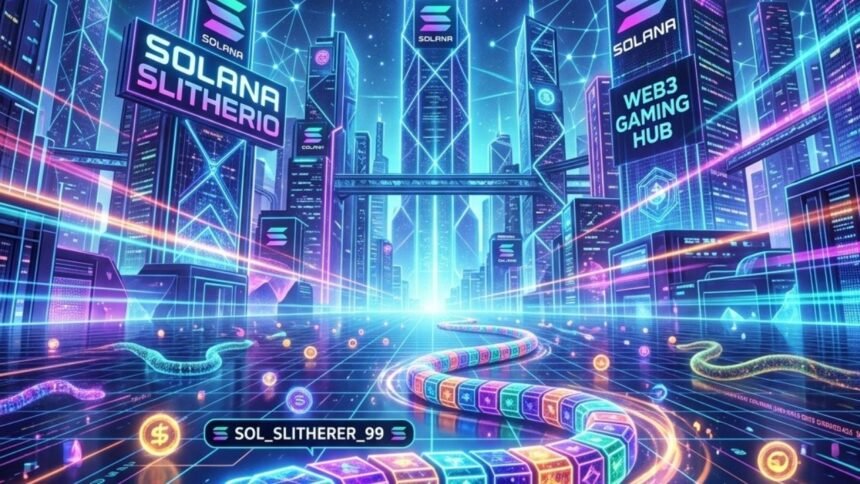
Solana Slitherio is a Web3 gaming adaptation of the popular classic snake game, built on the high-speed Solana blockchain. The game integrates play-to-earn mechanics, allowing players to earn cryptocurrency rewards, trade in-game non-fungible tokens (NFTs), and truly own their digital assets while competing in a decentralized multiplayer environment.
Many of us remember spending hours guiding a digital snake across a screen, eating glowing dots, and trying to trap opponents. That simple, highly addictive gameplay loop has now collided with the rapidly expanding world of Web3 gaming. By integrating blockchain technology into this familiar format, developers have transformed a casual pastime into a decentralized economy.
The integration of cryptocurrency and decentralized networks into gaming allows players to capture the financial value of the time they spend online. Instead of game developers keeping all the revenue generated from in-game purchases and advertisements, blockchain networks distribute these rewards back to the community.
This comprehensive guide breaks down exactly what Solana Slitherio is and how it functions within the broader crypto gaming ecosystem. We will explore the mechanics of the game, the economic model that powers rewards, and the specific advantages of using the Solana network. By the end of this post, you will understand how to participate, what risks to watch out for, and why this project is drawing attention from both casual gamers and serious cryptocurrency investors alike.
What Is Solana Slitherio?
Solana Slitherio represents the evolution of the massively multiplayer online snake genre, upgraded with decentralized technology. At its core, Solana Slitherio maintains the recognizable objective: players control a snake-like avatar, consume pellets scattered across the map to grow larger, and attempt to force other players into crashing into their snake’s body.
However, the connection to the Solana blockchain fundamentally changes the underlying architecture. Every skin, unique cosmetic item, and earned reward exists as a verifiable digital asset on a decentralized public ledger. When a player achieves a high score or defeats a formidable opponent, the game executes smart contracts to distribute tangible cryptocurrency rewards directly to that player’s digital wallet.
This deep gaming and crypto integration means players are no longer just users renting space on a centralized server. They are active participants and stakeholders in a digital economy. The Solana Slitherio platform uses blockchain infrastructure to ensure transparency, prevent cheating through verifiable code, and facilitate peer-to-peer trading of acquired assets.
How Does Solana Slitherio Work?
Understanding how Solana Slitherio operates requires looking at both the front-end gameplay and the back-end blockchain mechanics.
First, users must connect a compatible Web3 wallet, such as Phantom or Solflare, to the game’s interface. This wallet serves as the player’s account, identity, and bank. Once connected, the user can deploy their avatar into the arena. The gameplay mechanics rely on precise timing and quick reflexes. You navigate your snake using your mouse or keyboard, cutting off opponents to eliminate them and consume the energy they leave behind.
Behind the scenes, blockchain features actively track the game state. While the real-time movement is processed on high-performance servers to prevent lag, the critical economic actions—like buying a new skin, claiming a leaderboard prize, or transferring an asset—are recorded directly on the Solana blockchain.
User participation goes beyond just steering a digital snake. Because the platform incorporates Web3 mechanics, players can vote on future game updates, propose changes to the reward distribution, and participate in community tournaments where the entry fees and prize pools are entirely managed by automated smart contracts.
What Are the Key Features of Solana Slitherio?
The transition from a traditional web game to a blockchain game introduces several distinct features that elevate the user experience.
Lightning-Fast Transactions
Action-based games require immediate responsiveness. The Solana blockchain processes thousands of transactions per second (TPS). When players buy an item or claim a reward, the transaction finalizes almost instantly. You do not have to wait minutes or hours for network confirmations, which is a common frustration on older blockchain networks.
Incredibly Low Fees
Microtransactions are the backbone of modern gaming. Because Solana’s network fees are typically a fraction of a cent, players can freely trade low-value items, enter inexpensive tournaments, and move small amounts of cryptocurrency without losing their profits to network gas fees.
Decentralized Gaming Assets
In traditional gaming, if the developer shuts down the server, you lose all your purchased items. In Solana Slitherio, your cosmetic skins and earned tokens live in your personal cryptocurrency wallet. The decentralized gaming model ensures you have sovereign ownership over your digital property.
Community-Driven Ecosystem
Blockchain gaming emphasizes community governance. Active players often receive governance tokens, granting them voting rights. This means the community can directly influence development roadmaps, marketing initiatives, and token distribution schedules.
Why Build on the Solana Blockchain?
To understand the success of Solana Slitherio, we must examine the foundation it is built upon. What is Solana, and why is it the network of choice for this project?
Solana is a high-performance blockchain designed for massive scalability. It utilizes a unique consensus mechanism known as Proof of History (PoH), which timestamps transactions to create a verifiable, highly efficient historical record.
For gaming projects, the benefits are clear. Ethereum, while historically the most popular network for decentralized applications, often suffers from network congestion and high transaction fees during peak usage. A fast-paced game generating thousands of micro-interactions cannot function if every transaction costs five dollars and takes three minutes to clear.
Solana’s scalability and speed solve this bottleneck. With a theoretical limit of 65,000 transactions per second, the network easily accommodates the intense data demands of a multiplayer game environment. This architecture allows developers to build complex, responsive applications that feel identical to traditional Web2 games but carry all the advantages of Web3 ownership.
How Do Token Utility and Economics Work?
A well-designed economic model is critical for the longevity of any crypto gaming platform. Solana Slitherio utilizes a carefully structured token economy to align the incentives of developers, investors, and players.
The ecosystem typically relies on a native token that functions as the primary currency within the game universe. Players use this token to access premium game modes, purchase exclusive cosmetic items, and participate in special events.
The rewards system distributes these tokens to players based on their skill and engagement. A portion of the revenue generated from in-game purchases and tournament entry fees flows into a community treasury. Smart contracts then distribute this treasury to top-ranking players on the daily or weekly leaderboards.
Furthermore, the game integrates governance features. Players who hold and stake the native token can submit and vote on proposals. This democratic approach ensures the community has a voice in critical economic decisions, such as adjusting the inflation rate of the reward token or determining the theme of the next season’s NFT collection.
What Are the Play-to-Earn Opportunities in Solana Slitherio?
The play-to-earn model fundamentally shifts the value paradigm of online entertainment. Rather than paying for entertainment, players can generate income through skillful participation.
Players earn crypto rewards primarily through active gameplay. Surviving longer, eliminating high-ranking opponents, and dominating the leaderboard yield direct token payouts. These tokens can then be swapped on decentralized exchanges (DEXs) like Raydium or Orca for stablecoins or fiat currency.
NFT integration adds another layer to the earning potential. Cosmetic skins, custom snake patterns, and unique backgrounds are minted as NFTs. A player might earn a rare skin by winning a specific tournament. Because that skin is an NFT, the player can list it on a secondary marketplace like Magic Eden. If another player wants that specific rare look, they can purchase it directly, providing a financial incentive for high-level gameplay.
What Are the Benefits of Playing Solana Slitherio?
Engaging with this Web3 gaming ecosystem offers numerous advantages for both traditional gamers and cryptocurrency enthusiasts.
- Engaging gameplay: The core mechanics are universally understood and highly addictive. The low learning curve makes it accessible, while the multiplayer dynamics ensure a high skill ceiling.
- Blockchain ownership: You actually own the assets you spend time unlocking. You can sell them, trade them, or hold them in cold storage.
- Low-cost transactions: Thanks to the Solana ecosystem, moving assets and interacting with the game economy costs practically nothing.
- Growing Web3 gaming market: By participating early, players gain exposure to the rapidly expanding crypto gaming sector. As the platform grows and attracts more users, the underlying assets and tokens may appreciate in value due to increased demand.
What Risks and Challenges Does Solana Slitherio Face?
While the potential upside is significant, users must approach blockchain gaming with a clear understanding of the associated risks.
Market volatility heavily impacts the Web3 space. The fiat value of the game’s native token and its associated NFTs will fluctuate based on broader cryptocurrency market trends. A player’s earned rewards could lose significant value during a market downturn.
Project sustainability is another critical challenge. Many play-to-earn games suffer from hyperinflation if they print too many reward tokens without creating enough demand to buy them back. The development team must carefully balance the token economy to prevent the currency from crashing.
Security considerations are paramount. Players must practice good operational security, such as never sharing their wallet seed phrases and only interacting with official links. Phishing scams and malicious smart contracts are prevalent in the crypto space. Finally, competition in blockchain gaming is fierce. Solana Slitherio must continuously innovate and retain its player base amidst hundreds of new Web3 games launching every year.
How Does Solana Slitherio Compare to Traditional Online Games?
Understanding the value proposition of Web3 gaming becomes much easier when we compare it directly to standard Web2 gaming models.
Feature | Traditional Online Games | Solana Slitherio |
|---|---|---|
Asset Ownership | Owned by the developer. Accounts can be banned and items confiscated. | Owned by the player. Assets sit in a decentralized cryptocurrency wallet. |
Value Transfer | Money flows in one direction: from the player to the gaming studio. | Money flows fluidly. Players can sell assets to other players for real-world value. |
Platform Control | Centralized servers. Developers make all unilateral decisions. | Decentralized elements. Players hold governance tokens to vote on game updates. |
Secondary Markets | Often strictly prohibited. Trading items for real money can lead to account bans. | Highly encouraged. Supported by integrated NFT marketplaces and decentralized exchanges. |
This comparison highlights the decentralization advantages. Solana Slitherio empowers the user, transforming digital recreation into verifiable digital property.
What Is the Future Potential for Solana Slitherio?
The long-term outlook for Solana Slitherio depends heavily on execution and continued adoption of the Solana ecosystem.
Upcoming developments likely include expanded game modes, team-based battles, and integration with other decentralized finance (DeFi) protocols. We may see features like token staking, where players lock up their earnings to receive passive yields, further integrating the gaming experience with broader cryptocurrency financial tools.
Community growth will dictate the game’s success. A multiplayer game requires a robust, active player base to keep matchmaking fast and leaderboards competitive. By continually rewarding active participants and hosting high-profile tournaments, the project can maintain visibility in the crowded Web3 space. As blockchain infrastructure becomes more invisible to the end user—abstracting away the complexities of wallets and gas fees—games like Solana Slitherio are perfectly positioned to capture the massive demographic of casual gamers.
Frequently Asked Questions
What is Solana Slitherio?
Solana Slitherio is a multiplayer browser game based on the classic snake game format, integrated with the Solana blockchain. It allows players to compete against each other while earning cryptocurrency and trading digital assets.
Is Solana Slitherio free to play?
Yes, the core game is typically free to play. Users can connect a Web3 wallet and start playing without an initial investment, though premium features, specific tournaments, or rare cosmetic items may require purchasing tokens or NFTs.
Does Solana Slitherio use NFTs?
Yes, Solana Slitherio uses Non-Fungible Tokens (NFTs) to represent unique in-game items, such as custom skins, avatars, and cosmetic effects. These NFTs can be bought, sold, and traded on secondary Solana marketplaces.
Can players earn crypto rewards?
Absolutely. The platform uses a play-to-earn model where players can earn the game’s native cryptocurrency by achieving high scores, winning tournaments, and consistently ranking on the competitive leaderboards.
Is Solana Slitherio safe?
Playing the game is generally safe, but interacting with any blockchain application carries risk. Players should use dedicated gaming wallets, never share their private keys or seed phrases, and ensure they are interacting with the official game website to avoid phishing scams.
Ready to Grow Your Digital Snake?
The fusion of casual, highly accessible gameplay with complex blockchain economies represents a massive shift in digital entertainment. Solana Slitherio proves that Web3 gaming does not need to be overly complicated to be effective. By utilizing the fast, low-cost infrastructure of the Solana network, the developers have created an environment where players can truly own their achievements.
Before diving in, take the time to set up a secure Solana wallet like Phantom, fund it with a small amount of SOL to cover network fees, and review the game’s official documentation. Start with the free-to-play modes to understand the mechanics before committing any capital to premium NFTs or high-stakes tournaments. The world of blockchain gaming is evolving rapidly, and stepping into the arena today provides valuable experience for the decentralized digital economies of tomorrow.