
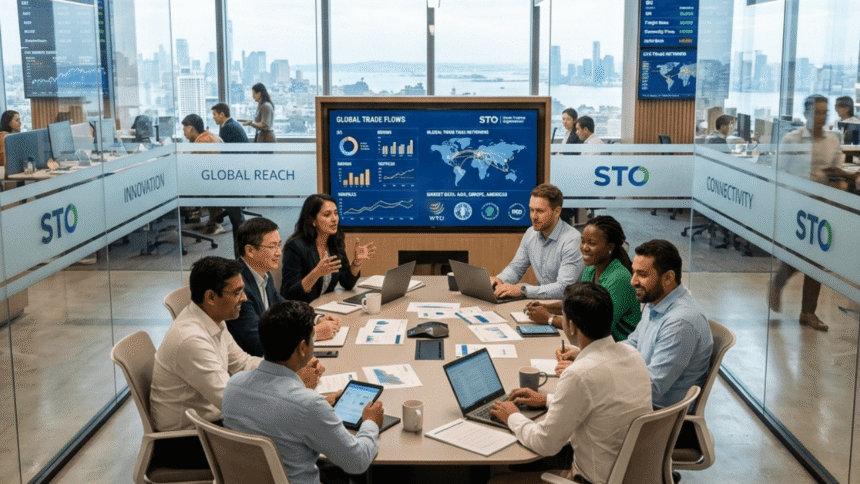
International state trading organization can sometimes feel like a complex puzzle. Countries constantly buy and sell goods across borders to keep their economies healthy and their citizens fed. While private companies handle a large portion of this activity, governments often step in to manage the flow of essential items. They do this to stabilize prices, secure critical supplies, and protect local industries.
A State Trading Organisation (STO) is a government-controlled or government-authorised institution established to regulate, supervise, and manage national and international trade activities on behalf of a country. These organisations play a strategic role in maintaining economic stability, controlling imports and exports, protecting domestic industries, and ensuring the balanced distribution of essential commodities. Unlike private trading companies, State Trading Organisations operate with broader national objectives rather than focusing only on profit generation. They often manage large-scale transactions involving food grains, petroleum products, minerals, machinery, agricultural commodities, and strategic resources.
This guide will explain everything you need to know about a state trading organisation. You will learn what they do, how to interact with them, and the common pitfalls to avoid when navigating government-controlled trade.
Understanding the State Trading Organization
A state trading organization (STO) is a government agency or a government-authorised company that has exclusive rights to buy or sell certain goods. Unlike private businesses that operate strictly for profit, an STO operates to fulfill national policy goals.
Governments use these organisations for several important reasons. First, they help secure essential resources like wheat, rice, or medical supplies. By controlling the supply, the government ensures that shortages do not cause massive price spikes for everyday citizens. Second, an STO can protect local farmers and manufacturers. By managing imports, the government prevents a flood of cheap foreign goods from bankrupting domestic businesses.
You will often find these organizations managing agricultural products, energy resources, and raw materials. Because they hold significant market power, their actions directly impact global trade volumes and prices.
| Factor | State Trading Organization | Private Trading Company |
|---|---|---|
| Ownership | Government | Private Individuals/Companies |
| Main Objective | National Economic Interest | Profit Generation |
| Market Control | High | Limited |
| Commodity Handling | Strategic & Essential Goods | Commercial Goods |
| Risk Management | Government Supported | Market Dependent |
| International Role | Trade Policy Support | Business Expansion |
| Price Stabilization | Yes | Usually No |
| Public Welfare Focus | Strong | Moderate |
How to Work with a State Trading Organization
Doing business with a government entity requires a different approach than dealing with a private company. If your business wants to supply goods to a state trading organization, or buy materials from one, you need a clear strategy. Follow this step-by-step guide to get started.
Step 1: Research the specific STO
Every country operates its trading organisations differently. Before making contact, study the specific agency you want to work with. Find out exactly what goods they manage, their purchasing cycles, and their current policy goals. Understanding their core mission will help you tailor your pitch.
Step 2: Understand the local regulations
Government entities are bound by strict legal frameworks. You must familiarise yourself with the country’s import and export laws, tariffs, and quality standards. Failing to meet a single regulatory requirement can instantly disqualify your business from a potential contract.
Step 3: Prepare your documentation
Bureaucracy plays a massive role in government trade. Gather all necessary compliance certificates, financial records, and product testing results. Ensure your paperwork is flawless, as state trading organizations rarely overlook administrative errors.
Step 4: Submit a formal proposal
Private trade often relies on quick negotiations and relationship building. Government trade relies on formal bidding processes. Submit a detailed proposal that outlines your pricing, delivery timelines, and quality guarantees. Make sure your offer aligns perfectly with the public tender requirements published by the organisation.
Major Functions of State Trading Organizations
Import Management
Controls and regulates imports of important products.
Export Promotion
Supports domestic industries in global markets.
Price Stabilization
Helps control sudden market fluctuations.
Strategic Resource Management
Handles essential national resources and commodities.
Foreign Trade Relations
Builds economic partnerships with other countries.
Top Tips for Successful STO Partnerships
Building a working relationship with a government body takes time and patience. Keep these tips in mind to improve your chances of success:
- Build local relationships: Partner with local legal advisors or consultants who understand the political landscape and cultural nuances.
- Focus on reliability: Governments prioritise stability over risky bargains. Prove that your supply chain is resilient and capable of meeting strict deadlines.
- Stay updated on policy changes: A sudden change in national policy can shift an organization’s purchasing priorities overnight. Monitor the local news and political announcements.
- Offer competitive pricing: While quality matters, state trading organizations are highly accountable for public spending. Your pricing must be highly competitive to win government tenders.
Advantages of State Trading Organizations
| Advantage | Benefit |
|---|---|
| Economic Protection | Protects local industries |
| Market Stability | Reduces price volatility |
| Better Trade Control | Regulates national trade flow |
| National Security | Manages critical resources |
| Revenue Generation | Supports government income |
Disadvantages of State Trading Organizations
| Disadvantage | Impact |
|---|---|
| Bureaucracy | Slower decision-making |
| Limited Competition | Reduced market flexibility |
| Political Influence | Policy-based trade decisions |
| Operational Inefficiency | Possible management delays |
Common Mistakes to Avoid
Many businesses stumble when trying to navigate government-controlled trade. Avoid these frequent errors:
- Ignoring the political context: Treating an STO like a regular private business is a major misstep. Their decisions are driven by national interests, not just profit margins.
- Rushing the process: Government negotiations move slowly. Trying to force a quick decision will only frustrate the officials managing the deal.
- Submitting incomplete paperwork: A missing signature or an expired certificate will result in immediate rejection.
- Failing to register properly: Many organizations require foreign suppliers to register in a specific government database before they can legally submit a bid.
How Governments Can Improve STO Operations
While state trading organizations serve a vital purpose, they are not perfect. Economists and trade experts often suggest several improvements to make these entities more efficient and fair.
First, increasing transparency helps build trust. By publishing clear guidelines, pricing data, and tender results, governments can prevent corruption and encourage more competitive bidding.
Second, organizations should adopt modern digital tools. Replacing outdated paper-based systems with secure supply chain software dramatically speeds up processing times and reduces costly administrative errors.
Finally, governments must regularly review the scope of their trading organizations. If an industry becomes stable and highly competitive on its own, it might be time for the government to step back and allow private businesses to take over.
Navigating the Future of Global Trade
A state trading organization plays a crucial role in balancing national security with international commerce. By controlling the flow of essential goods, governments can protect their citizens and stabilize their local economies.
If you plan to enter markets heavily regulated by these entities, preparation is your best asset. Take the time to study local laws, prepare meticulous documentation, and exercise patience during the bidding process. By understanding the unique motivations behind government-backed trade, you can position your business as a reliable and valuable international partner.
Start your journey by researching the specific state trading organization operating in your target country. Look up their recent public tenders and review their official supplier requirements.
Frequently Asked Questions (FAQs)
What is the main difference between an STO and a private company?
A private company aims to maximise financial profits for its owners or shareholders. A state trading organization aims to achieve public policy goals, such as stabilising food prices, securing energy supplies, or protecting local industries from foreign competition.
Are state trading organizations legal under international trade rules?
Yes. The World Trade Organization (WTO) allows countries to establish these entities. However, the WTO requires these state trading organization to operate fairly and not use their monopoly power to unfairly discriminate against foreign suppliers.
What kind of products do these organizations usually handle?
They typically manage essential commodities that are vital to national security or public welfare. Common examples include wheat, rice, corn, crude oil, natural gas, and essential medical supplies.
Can small businesses work with government trading organizations?
Yes, small businesses can participate, provided they meet the strict regulatory and volume requirements. However, smaller companies often find it easier to partner with larger established suppliers rather than bidding directly on massive government contracts.